
Why Professional Paint Matching Is Worth the Cost
Your car gets a scratch. Maybe it’s a door ding in a parking lot, a minor fender bender, or a scuff from a grocery cart. Whatever the cause, the damage is there — and now you’re weighing your options. A DIY touch-up kit from the auto parts store seems tempting, especially when you see the price tag on professional car paint repair. But before you grab that little bottle of paint and a tiny brush, it’s worth understanding why professional paint matching is often the smarter investment.
The Challenge of Getting Color Right
Car paint isn’t just a single color. It’s a complex formula that accounts for the specific shade, metallic flake distribution, pearl effects, and even the way light reflects off the surface. Manufacturers mix thousands of variations of what might look like the same basic hue.
To make things more complicated, your car’s paint has also changed over time. Sun exposure, washing, and general weathering cause the original finish to shift — sometimes subtly, sometimes noticeably. That means matching your car’s current color is a far more nuanced challenge than simply looking up the factory paint code.
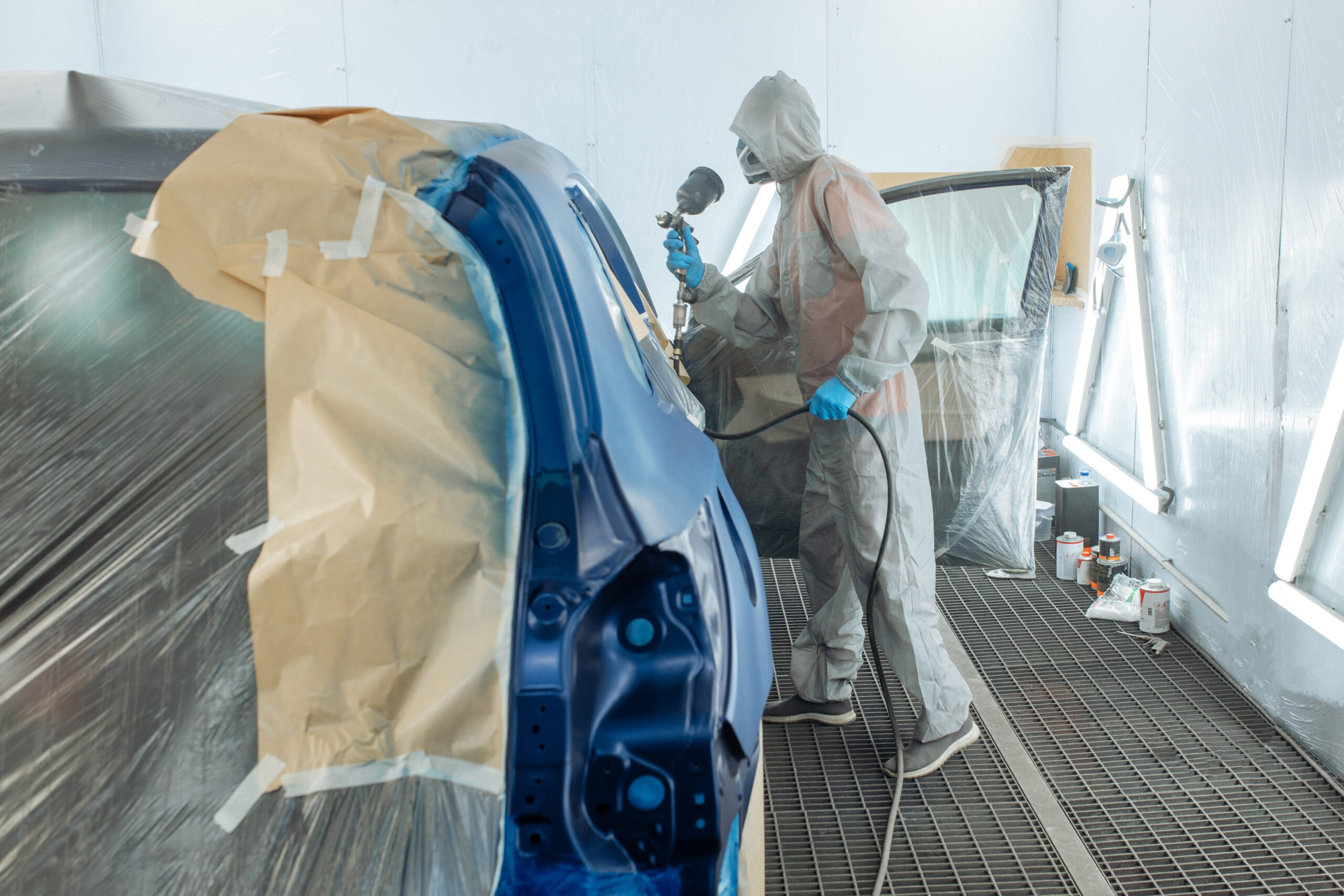
A professional body shop has the tools, technology, and trained eye to account for all of this. Spectrophotometers, computerized mixing systems, and years of hands-on experience allow technicians to dial in a match that blends seamlessly with the surrounding panels.
Why DIY Color Matching Falls Short
Touch-up paint from a bottle can work for very minor chips on inconspicuous areas. But for anything larger — a panel, a bumper, a visible section of the door — the limitations become obvious quickly.
The most common problem is that the repair stands out. Even if the color code matches, the texture, sheen, and application method all affect how the final result looks in natural light. DIY applicators rarely produce the uniform coverage that professional spray equipment delivers.
Then there’s the layering. Professional car paint repair involves primer, base coat, clear coat, and sometimes blending into adjacent panels — a process that requires skill, proper preparation, and the right environment to execute well. Cutting corners at any stage leads to peeling, bubbling, or a color mismatch that becomes more noticeable over time.
What You’re Actually Paying For
When you take your car to a professional, you’re paying for more than paint. You’re paying for:
- Precision color analysis using advanced technology that accounts for your car’s aged finish
- Surface preparation that ensures proper adhesion and a lasting result
- Application expertise that produces smooth, even coverage without runs or texture inconsistencies
- Clear coat finishing that protects the repair and restores the original gloss level
- Blending techniques that make the repaired area virtually indistinguishable from the rest of the vehicle
Each of these steps adds to the cost — and each one contributes directly to a repair that actually holds up.
The Long-Term Value
A poor paint repair doesn’t stay hidden. It fades faster, peels sooner, and can draw more attention to the damage than the original scratch ever did. If you plan to sell or trade in your vehicle, an obvious DIY repair can lower the perceived value and raise red flags for buyers.
Professional car paint repair protects your investment. A quality match done right the first time saves you from paying twice — once for the quick fix that didn’t work, and again for the professional repair you should have started with.
The Bottom Line
There’s a reason professional paint matching costs what it does. The technology, training, and time involved are real — and so are the results. If appearance and long-term value matter to you, the professional route isn’t an extravagance. It’s the practical choice.