

Fed’s Barkin says U.S. labor supply problems may outlast pandemic -Breaking
[ad_1]
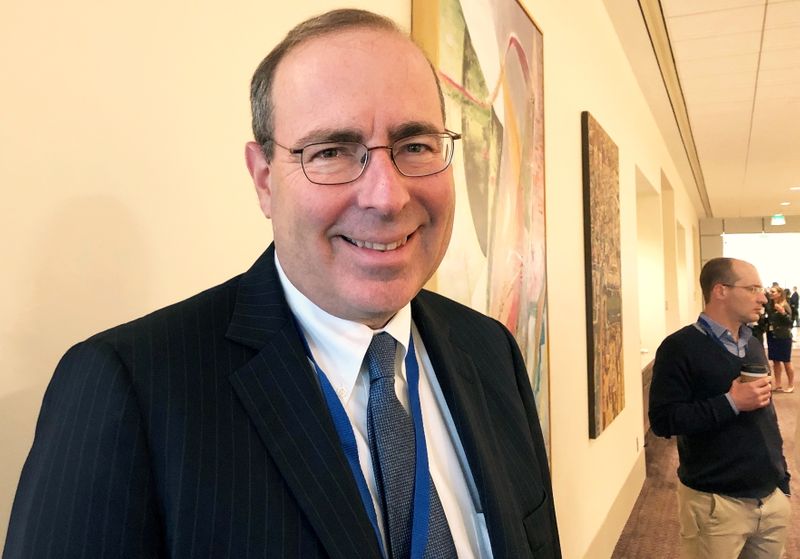 © Reuters. FILE PHOTO: Federal Reserve Bank of Richmond President Thomas Barkin poses during a break at a Dallas Fed conference on technology in Dallas, Texas, U.S., May 23, 2019. REUTERS/Ann Saphir
By Howard Schneider
WASHINGTON (Reuters) – U.S. labor shortages may outlast the coronavirus pandemic and limit overall economic growth unless the country comes up with better education, health and childcare policies to boost the number of people willing and able to work, Richmond Federal Reserve President Thomas Barkin said on Tuesday.
“As our workforce ages and birthrates decline, we could find workforce availability limiting our economic growth,” Barkin said in prepared remarks for delivery to a South Carolina Chamber of Commerce event, noting that while labor shortages have appeared acute during the pandemic reopening, they represent a longer-term challenge to the country.
“Overall, this is a math problem. Over time, we can’t grow without more workers. The best source of more workers is those on the sidelines. And those on the sidelines won’t come back to the labor market unless the math makes better sense to them,” Barkin said, through childcare programs that help parents, better pay and transport options, or even incentives for older people to stay in jobs.
He noted, for example, that parental leave policies in Canada appeared to help boost labor force participation there, while Japan has used a combination of later mandated retirement ages and subsidies for older workers to boost the number of people aged 60 to 64 in the workforce.
The prospect of limitations on U.S. labor participation is a key issue for the Fed as it contemplates a shift towards post-pandemic monetary policy. More workers than expected retired during the crisis, while others, particularly women and those in lower-paid jobs, stopped working because of family care responsibilities or concerns about health risks.
Some have been hesitant to return to their same jobs absent higher pay.
That, in turn, has raised questions about whether the U.S. central bank may reach its goal of “maximum employment” sooner than expected.
“We may find labor shortages lasting far beyond this pandemic,” Barkin said. Among the 100 million adults not working or looking for work, “opting out is the right decision” because they are retired, for example, or in school.
But “it is easy to imagine many could be open to working,” he said, with 6 million of those out of the labor force, for example, saying on surveys that “they want a job but just aren’t looking.”
Fusion Media or anyone involved with Fusion Media will not accept any liability for loss or damage as a result of reliance on the information including data, quotes, charts and buy/sell signals contained within this website. Please be fully informed regarding the risks and costs associated with trading the financial markets, it is one of the riskiest investment forms possible.
[ad_2]