
The Infinite Hunger: Why We Seek Fulfillment in Places That Can Never Provide It
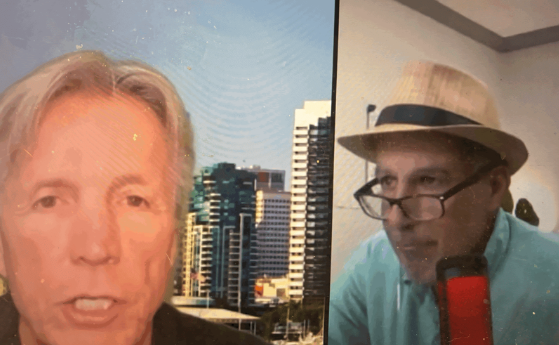
Guest Post based on the video: “Unlocking the Connection Between Trauma and Addiction with David”
For decades, society has treated addiction as a moral failing or a simple lack of willpower. We look at the alcoholic, the gambler, or the compulsive eater and ask, “Why can’t they just stop?” We view the substance or the behavior as the enemy, believing that if we can just remove the bottle, the betting app, or the toxic relationship, the problem will be solved.
But as explored in a profound new conversation with David, this perspective is not only incomplete—it is dangerously misleading.
In this insightful episode, David peels back the layers of human behavior to reveal a stark truth: Addiction is not the problem. Addiction is the solution.
It is a maladaptive, destructive solution, certainly. But for the person suffering, the addiction is an attempt to solve a much deeper, more agonizing problem. It is a desperate attempt to soothe the invisible wounds of trauma, anxiety, and depression.
The roots of the tree
If you look at a weed in your garden and simply snip off the leaves, it will grow back within days. To remove it, you must dig up the root.
In this video, David eloquently argues that we spend too much time focusing on the “leaves” of addiction—the specific behaviors—while ignoring the root system that feeds them. That root system is almost always comprised of unresolved trauma.
Trauma is not limited to catastrophic events like war or physical abuse. As David highlights, trauma can be subtle. It is the cumulative weight of feeling unsafe, unseen, or unworthy during our developmental years. It is the quiet hum of anxiety that tells us we are not enough. It is the heavy blanket of depression that makes existence feel unbearable.
When a person lives with this constant internal dissonance, the brain screams for relief. It seeks an exit strategy. And this is where addiction enters the stage. It offers a promise: “I can make you feel okay, even if just for a moment.”
The Many Faces of the Same Ghost
One of the most compelling aspects of this conversation is how David expands the definition of addiction. We are conditioned to think of addiction in terms of heroin, cocaine, or alcohol. But the mechanism of addiction—the dopamine loop used to numb pain—is universal.
David points out that the “drug of choice” is often irrelevant; what matters is the function it serves.
1. The Food Trap: For many, the refrigerator is the most accessible pharmacy. Sugar and highly processed foods trigger the same reward centers in the brain as opiates. When David discusses the spiral into food addiction, he isn’t talking about hunger. He is talking about using food to stuff down emotions that are too difficult to digest. It is an attempt to fill an emotional void with physical substance.
2. The Gamble of Hope: Gambling addiction is rarely about money; it is about the rush of possibility. For someone struggling with depression, the flatness of everyday life can be suffocating. The high-stakes environment of gambling provides a jolt of adrenaline and dopamine that makes them feel alive again. It is a way to manufacture feeling in a numb world.
3. The Relationship Fix: Perhaps the most insidious and socially acceptable form of addiction discussed is the addiction to relationships. This is often labeled as “codependency,” but David frames it as using another person as a medication. If we feel fundamentally unworthy or unsafe (due to past trauma), we may latch onto a partner to validate our existence. We become addicted to the highs and lows of a chaotic relationship because it distracts us from the terrifying quiet of being alone with ourselves.
The Cycle of Unfulfillment
Why do these “solutions” inevitably fail? Why do we keep going back to the well even when we know it’s dry?
David touches on a concept that is crucial for anyone seeking to understand addiction: The Law of Diminishing Returns.
When we use an external substance or behavior to fix an internal spiritual or psychological wound, it never actually heals the wound. It only numbs it. Therefore, the relief is always temporary. The anxiety returns. The depression creeps back in. The trauma resurfaces.
Worse yet, the brain builds a tolerance. The chocolate cake that once comforted you now leaves you feeling sick and guilty. The gambling win that once felt euphoric now feels like relief from debt. The relationship that once felt like a fairytale now feels like a prison.
This is the tragedy that David exposes: We seek fulfillment in these unhealthy ways, but we never truly find it. We are pouring water into a bucket with a hole in the bottom. We are chasing a horizon that moves further away the faster we run toward it.
A Fresh Perspective on Healing
So, where is the hope? If the “solution” of addiction is a trap, how do we escape?
This episode offers a fresh, albeit challenging, perspective on the journey to healing. David suggests that recovery cannot simply be about “white-knuckling” it. You cannot just grit your teeth and stop the behavior, because the underlying pain will eventually find a new outlet. If an alcoholic stops drinking but doesn’t address their trauma, they might become a workaholic, or a rage-holic, or a food addict. This is often called “addiction transfer.”
True healing, as explored in this conversation, requires the courage to stop running. It involves turning around and facing the very things we have spent our lives trying to escape.
It means:
- Acknowledging the Trauma: Admitting that there is a wound that needs attention, rather than dismissing our past as “not that big a deal.”
- Sitting with the Discomfort: Learning to tolerate anxiety and sadness without immediately reaching for a numbing agent.
- Seeking Connection: Realizing that the opposite of addiction is not sobriety; the opposite of addiction is connection. Connection to self, connection to others, and connection to reality.
Conclusion: Unlocking the Door
If you have ever wondered why you or someone you love seems stuck in a loop of self-destructive behavior, this video is a must-watch. David’s insights offer more than just an explanation; they offer a roadmap.
By understanding the intricate connection between trauma and addiction, we can stop fighting the symptoms and start healing the source. We can stop shaming ourselves for our struggles and start offering ourselves the compassion necessary to recover.
The journey out of the “void” is not easy. It requires introspection, vulnerability, and often, professional help. But as David reminds us, it is the only path that leads to true, lasting fulfillment—the kind that doesn’t wear off when the high fades