
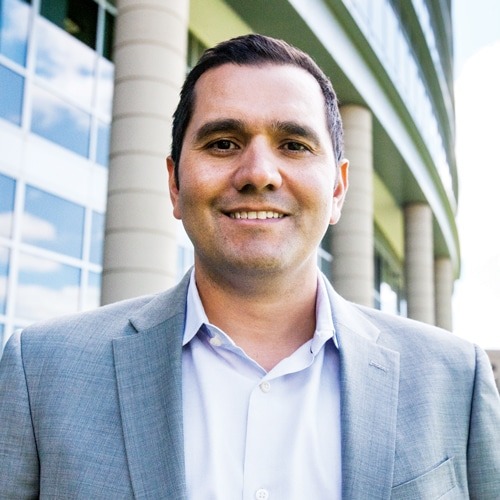
Mauricio Pincheira: Building and Scaling Operational Teams Across Borders
The ability to lead a single high-performing team is a foundational management competency. The ability to build, align, and sustain multiple operational teams across different national contexts — each with distinct labor markets, cultural norms, regulatory environments, and organizational expectations — is something else entirely. Mauricio Pincheira, who leads Automotive and Industrial operations at The Chemico Group across the U.S., Canada, and Mexico, operates at that second level. His career of more than 25 years in the automotive, industrial, and energy sectors has been defined not only by what he has built, but by how consistently those operational structures have performed across borders.
Why Multi-Country Team Leadership Is Structurally Different
Leading operations in a single national market is demanding. Leading them across three is a different organizational problem. The challenges are not simply additive — they are multiplicative. A policy or process that functions well in the U.S. may conflict with labor law in Mexico or management convention in Canada. A communication cadence that keeps a U.S.-based team aligned may not translate effectively across time zones, languages, and organizational cultures.
Executives who navigate this successfully do so by building systems that are simultaneously consistent and adaptable: consistent in their standards, expectations, and accountability structures; adaptable in how those standards are implemented and communicated across each national context. That balance is not easy to strike, and it does not happen by accident. It is the product of operational design.
Mauricio Pincheira’s three-country mandate at The Chemico Group requires exactly this kind of design thinking. The Automotive and Industrial division he leads must perform at the same level of reliability and compliance across all three markets, serving clients whose procurement standards do not vary by geography. Delivering that consistency requires teams that are structured, trained, and led to produce the same quality of output regardless of which side of a national border they operate on.
The Six Sigma Approach to Team Performance
Organizational performance, like process performance, is subject to variation. Teams produce inconsistent outputs when expectations are unclear, when feedback loops are slow, when accountability structures are ambiguous, or when individuals lack the skills to execute the defined process. These are not motivation problems. They are system problems, and they respond to system-level solutions.
Six Sigma, as a methodology, addresses variation at its root. Applied to team leadership, it means defining performance expectations in measurable terms, building feedback mechanisms that surface deviation early, and creating improvement cycles that treat underperformance as a process problem to be solved rather than a personnel problem to be managed. An executive certified as a Six Sigma Master Black Belt at the highest level of that discipline has internalized this logic completely.
The team-building philosophy that characterizes Mauricio Pincheira’s operational leadership applies Six Sigma’s variation-reduction principles to organizational performance across three national markets. The result is not uniformity of culture — cultures differ, and that difference is a feature, not a flaw. The result is uniformity of standard, delivered through processes that account for local context without compromising enterprise-level consistency.
Organizational Change Across Mergers and Transformations
Building a team from scratch is one thing. Inheriting teams through mergers and leading them through transformation is another — and it is the more common challenge for executives operating at the scale Pincheira has reached throughout his career.
Mergers create organizational uncertainty. Roles shift, reporting structures change, and the cultural identities of acquired teams are disrupted. In that environment, performance can deteriorate rapidly if leadership does not move quickly to establish clarity, rebuild trust, and redefine shared purpose. The executives who manage this well are those who understand that operational continuity during a merger is not a given — it is an active leadership achievement.
Pincheira’s career record includes leadership through mergers and acquisitions across the automotive, industrial, and energy sectors. That experience is operationally distinct from leading a stable organization. It requires the ability to assess inherited team structures quickly, identify where capability gaps exist, and implement change without triggering the disengagement that makes post-merger performance recoveries so difficult to sustain.
The Project Management Professional framework provides the structural discipline for this kind of transition management — phased implementation, clear milestone ownership, and governance mechanisms that keep accountability from becoming dispersed during periods of organizational flux. Combined with the process rigor of Six Sigma, it describes an executive equipped to lead teams through the most structurally demanding environments industrial operations produce.
Talent Development in Demanding Industrial Environments
High-performing operational teams in automotive and industrial supply chains are not assembled from off-the-shelf talent pools. The technical demands of chemical management, the compliance requirements of multi-jurisdiction operations, and the precision standards of automotive supply chains require individuals who have been developed — through training, through mentorship, and through exposure to progressively more complex operational challenges.
Talent development in this environment is not a separate HR function. It is an operational investment with a direct return in team performance, compliance outcomes, and organizational resilience. An enterprise that builds people well retains them longer, loses less institutional knowledge when turnover occurs, and produces operational continuity that cannot be purchased from the outside.
Mauricio Pincheira’s approach to building operational teams across The Chemico Group’s North American footprint reflects an understanding that sustainable performance is produced by organizations that invest in developing the people who deliver it. In sectors where technical expertise is difficult to acquire and even more difficult to replace, that investment is not a cultural nice-to-have. It is a strategic necessity.
Alignment as the Foundation of Cross-Border Performance
At the scale of The Chemico Group’s North American operations, the risk of organizational misalignment is constant. Teams operating in different markets, under different regulatory requirements, serving different client segments, can easily develop operational practices that diverge from one another — and from enterprise standards — over time. That divergence is not always visible from the top until it has already affected performance or compliance.
The leaders who prevent that drift are the ones who build alignment actively and continuously — through communication structures, through shared performance metrics, and through a leadership presence that signals that enterprise standards apply uniformly across every market the organization serves.
Mauricio Pincheira’s career, spanning more than 25 years of cross-sector and cross-border operational leadership, reflects a sustained commitment to exactly that kind of alignment. The Chemico Group’s ability to serve automotive and industrial clients across the U.S., Canada, and Mexico with consistent, documented, compliance-grounded performance is not the outcome of organizational luck. It is the outcome of operational leadership that has been built, maintained, and continually refined by an executive whose career has been defined by the discipline of making complex organizations perform consistently at scale.
About Mauricio Pincheira
Mauricio Pincheira is a senior executive with more than 25 years of experience in the automotive, industrial, and energy sectors. He leads Automotive and Industrial operations at The Chemico Group, one of North America’s largest minority-owned chemical management and distribution enterprises, overseeing teams and operations across the U.S., Canada, and Mexico. A certified Six Sigma Master Black Belt and Project Management Professional, he has led mergers, operational transformations, and sustainability initiatives throughout his career. He is a recipient of the HACR Young Hispanic Corporate Achievers Award. Learn more about Mauricio Pincheira’s cross-border team leadership and operational management record through his professional profile.