
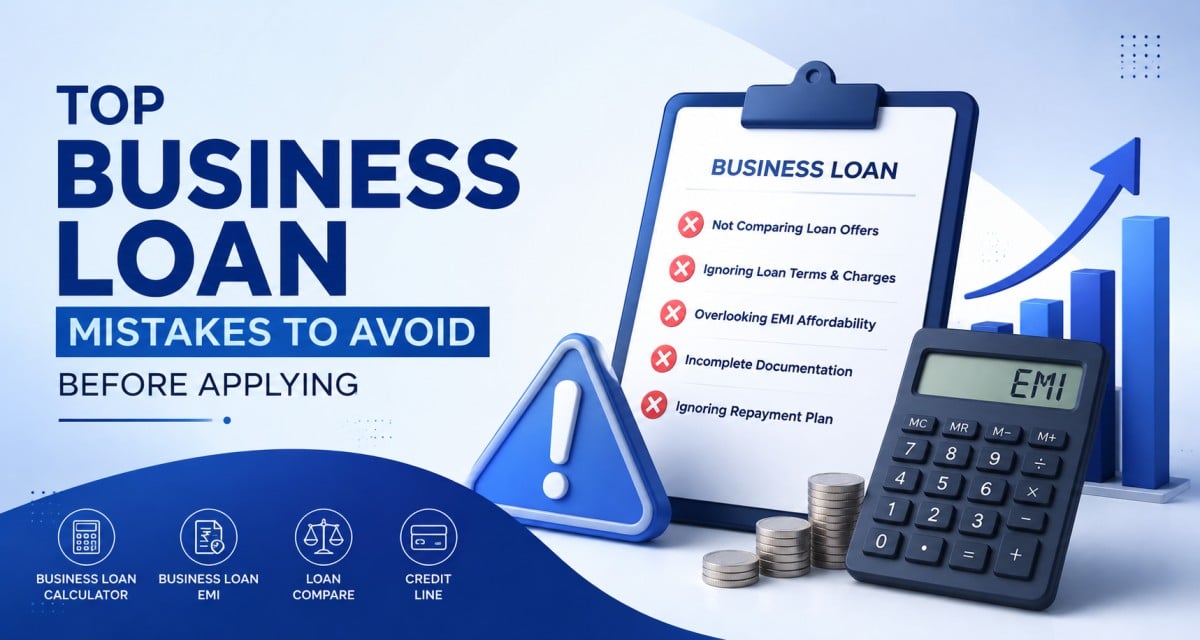
Top Business Loan Mistakes to Avoid Before Applying
Applying for a business loan can help you expand operations, purchase equipment, hire employees, or improve cash flow. However, many businesses make avoidable mistakes that lead to loan rejection, higher interest costs, or repayment challenges. Whether you’re a startup or an established business, understanding these mistakes can improve your chances of approval and help you borrow wisely.
1. Applying Without Checking Loan Eligibility
One of the biggest mistakes is applying without understanding the lender’s eligibility criteria. Every bank and NBFC has different requirements based on business age, annual turnover, credit history, and profitability.
Before submitting your application, review the eligibility requirements and gather all required documents. This saves time and reduces unnecessary credit inquiries.
2. Ignoring Your Credit Score
Your business and personal credit scores play a significant role in loan approval. A poor credit history can result in loan rejection or higher interest rates.
Before applying:
- Review your credit report.
- Correct any errors.
- Pay existing EMIs on time.
- Reduce outstanding debt.
A healthy credit profile improves your negotiating power with lenders.
3. Borrowing More Than You Need
Many borrowers apply for the maximum available loan amount rather than calculating their actual business needs.
A larger loan means:
- Higher business loan EMI
- Increased interest payments
- Greater financial pressure
Borrow only what your business genuinely needs to maintain healthy cash flow.
4. Not Using a Business Loan Calculator
Many applicants skip repayment planning altogether.
A business loan calculator helps estimate:
- Monthly EMI
- Total interest payable
- Total repayment amount
- Suitable loan tenure
Knowing these figures beforehand helps you choose a loan that fits your business budget and avoids repayment stress.
5. Failing to Compare Loan Offers
Accepting the first offer can be costly. Different lenders provide varying:
- Interest rates
- Processing fees
- Loan tenure
- Prepayment charges
- Approval time
Always compare loans from multiple lenders before making a decision. Even a small difference in interest rates can save a significant amount over the loan period.
6. Ignoring Hidden Charges
Many borrowers focus only on the interest rate while overlooking additional costs.
Common charges include:
- Processing fees
- Documentation charges
- Foreclosure fees
- Late payment penalties
- EMI bounce charges
Read the loan agreement carefully to understand the total borrowing cost.
7. Choosing the Wrong Loan Type
Not every business needs the same financing solution.
For example:
- Working capital loans are ideal for daily operational expenses.
- Equipment loans are suitable for machinery purchases.
- A credit line offers flexible access to funds whenever required.
- Term loans are better for long-term business expansion.
Choosing the appropriate financing option reduces borrowing costs and improves financial flexibility.
8. Poor Financial Documentation
Incomplete or inaccurate financial records often delay loan approval.
Maintain updated:
- Bank statements
- GST returns
- Income tax returns
- Profit and loss statements
- Balance sheets
Well-organized records build lender confidence and speed up processing.
9. Startups Not Preparing a Business Plan
Many startups assume a great idea is enough to secure funding.
Lenders generally expect:
- Business objectives
- Revenue projections
- Market analysis
- Growth strategy
- Cash flow estimates
A professional business plan demonstrates repayment capacity and long-term viability.
10. Not Planning EMI Repayment
Many businesses focus on receiving the loan rather than repaying it.
Before borrowing:
- Estimate future revenue.
- Calculate monthly expenses.
- Ensure the business loan EMI fits comfortably within your cash flow.
Proper repayment planning prevents defaults and protects your credit profile.
Tips for a Successful Business Loan Application
- Check eligibility before applying.
- Maintain a strong credit score.
- Use a business loan calculator to estimate EMIs.
- Compare loans from different lenders.
- Choose the right financing option, including a credit line when flexibility is needed.
- Keep financial documents updated.
- Borrow only the required amount.
- Plan repayments carefully.
Conclusion
A business loan can become a valuable growth tool when used wisely. Avoiding common mistakes such as ignoring your credit score, failing to compare lenders, skipping EMI calculations, or choosing the wrong loan product can save you money and improve your chances of approval.
Whether you are an established business or one of many growing startups, taking time to research, use a business loan calculator, compare lenders, understand your business loan EMI, evaluate credit line options, and compare loans before applying will help you make a confident financial decision that supports long-term business growth.